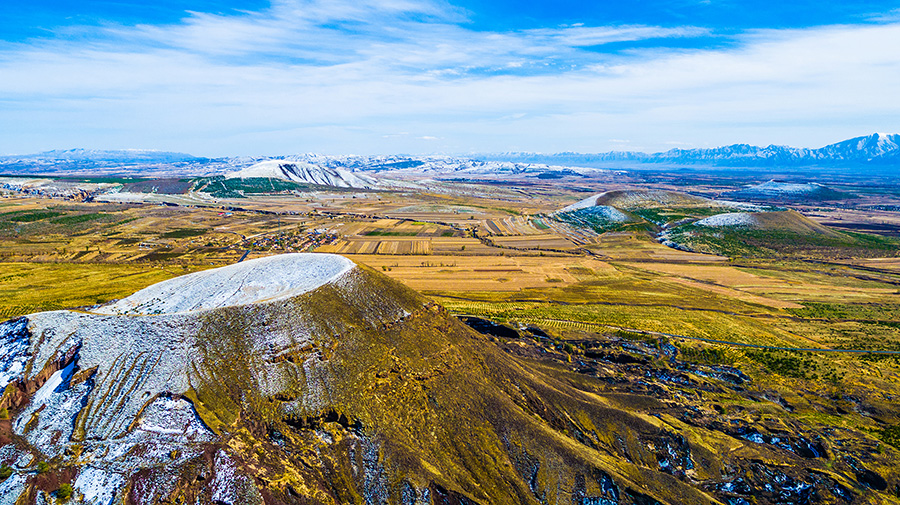
Loess Plateau
Introduction
The Loess Plateau, located in northern and central China, is a vast and distinctive geographical area known for its unique loess soil deposits. Covering approximately 640,000 square kilometers, it is a region with a rich geological history and an essential role in the ecological and agricultural development of China.
The plateau is characterized by its steep, rolling hills and deep gorges, formed by the erosion of its soft, wind-blown sediment. The area has been a site of intense human settlement and agricultural activity for thousands of years, but it has also faced environmental challenges, including soil erosion and desertification.
Geography and Features
The Loess Plateau stretches across several provincial areas in China, including Shanxi, Gansu, Shaanxi and Inner Mongolia. The region is primarily composed of loess, a fine, yellowish dust-like material deposited by wind, which forms thick layers across the plateau. This soil is highly fertile, supporting various agricultural activities, especially the cultivation of wheat, corn, and millet. However, its loose composition makes it vulnerable to erosion, a major concern for the area's sustainability.
The topography of the plateau is marked by a series of valleys, ridges, and terraces, with elevations ranging from 1,000 meters to over 3,000 meters. The plateau's landforms are primarily shaped by the erosion caused by wind and water, which have carved the landscape into dramatic cliffs and ravines. The Yellow River, which flows through the region, has also contributed to its geomorphology, creating fertile floodplains in some areas but also exacerbating soil erosion in others.
Historically, the Loess Plateau was covered by grasslands and sparse forests, which helped protect the soil from the elements. However, extensive deforestation and overgrazing led to significant degradation of the land. This resulted in severe soil erosion, which in turn led to reduced agricultural productivity, silt-filled waterways and increased frequency of sandstorms. By the late 20th century, the environmental situation had become dire, prompting government intervention.
Since the 1990s, China has implemented several large-scale ecological restoration projects, such as the "Grain for Green" program, which aimed to return degraded agricultural land to natural vegetation. These efforts, including the planting of trees and the promotion of sustainable farming techniques, have yielded some positive results, although challenges remain in ensuring the long-term success of these initiatives.
Cultural and Economic Significance
The Loess Plateau has been inhabited for thousands of years, and its agricultural development has been crucial to China's economy. The region has supported a large population, with farming being the primary livelihood for millions of people.
The local population has adapted to the region's semi-arid climate, developing unique farming practices and architectural styles suited to the harsh conditions. However, the economic prosperity of the region has often been threatened by the ongoing environmental challenges, and efforts to balance agricultural production with ecological conservation remain a central concern.
While tree planting programs have made strides in reducing soil erosion, not all efforts have been successful. In some areas, trees have struggled to survive due to insufficient rainfall and competition for water with local farming needs. Experts now emphasize the importance of understanding local ecological conditions and prioritizing the restoration of native plant species to achieve more sustainable results.
The Loess Plateau remains a critical area for both ecological restoration and economic development. With continued research and careful planning, there is hope that the region can achieve a balance between agriculture and environmental sustainability, preserving its unique landscape for future generations.








